
Shanghai Different Advanced Material Co., Ltd. is one of the leading manufacturers and suppliers of dope-dyed pla staple fiber in China. With abundant experience, we are committed to providing high quality custom service for global clients. Welcome to wholesale premium dope-dyed pla staple fiber made in China here from our factory.
Dope-Dyed PLA Staple Fiber
Pigment Goes In With The Melt, Not In A Dye Bath
Polylactic acid has a narrow wet-processing window, so pigment is metered into the chips instead of dyed on afterwards. Dope-Dyed PLA Staple Fiber keeps the plant-derived carbon and industrial composting potential of the polymer while skipping alkaline scouring and reduction clearing altogether.
Product Overview
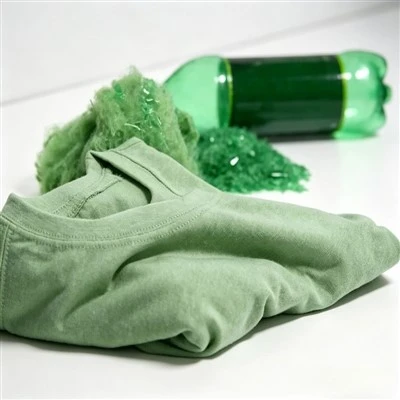
Dope-dyed PLA staple fiber combines bio-based polylactic acid with in-melt pigment coloration, delivering plant-derived, industrially compostable colored fiber without disperse dyeing, alkaline scouring or reduction clearing. Unlike conventional PET, PLA is heat-sensitive and cannot withstand high-temperature deep dyeing - hot wet processing causes hydrolysis and irreversible strength loss. By embedding pigment masterbatch inside the fiber matrix during melt spinning at 210–240°C, this colored PLA staple achieves deep, uniform shades and reliable wash fastness while preserving soft hand, high loft and the polymer's inherent biodegradability. It is 10% lighter than polyester at density 1.25 g/cm³ and is widely used in hygiene topsheets, baby textiles, nonwoven filters, packaging fabrics and next-to-skin knits.

Technology Principle
Why dope dyeing at all. Polylactic acid is normally dyed with disperse dyes. These dyes take up quickly but suffer from poor migration and sublimation fastness. Higher dyeing temperature accelerates PLA hydrolysis. Alkaline pretreatment and reduction clearing damage the fiber, requiring full reformulation of wet processing recipes. Adding pigments during spinning eliminates all these issues. Specifically, PLA's low heat resistance means high-temperature dyeing cannot achieve deep shades without severe hydrolysis and strength degradation - dope dyeing bypasses this limitation entirely by locking color in the fiber before any wet processing takes place.
Carrier matching comes next. The masterbatch consists of pigment, carrier resin and dispersing aid. The carrier must be PLA-based copolymer or specially formulated copolyester with matched melting point. If the melting point is too high, the carrier will not melt; if too low, it will flow prematurely. Either case leads to poor pigment dispersion and filament breakage.
Pigment selection follows. Processing at 210–240°C is moderate for most organic pigments. Selected pigments must resist sublimation and color shift at this temperature, and be free of metal ions that catalyze PLA degradation.
Core Advantages
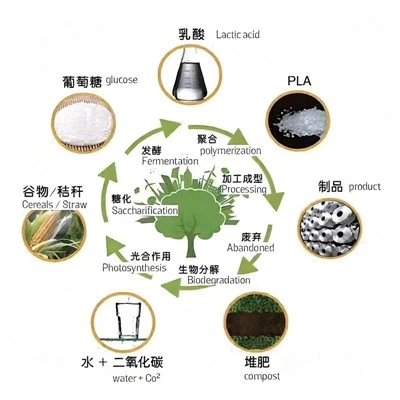
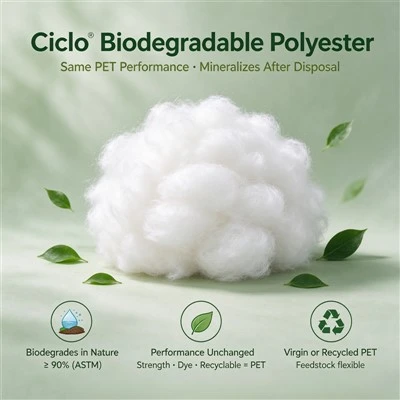
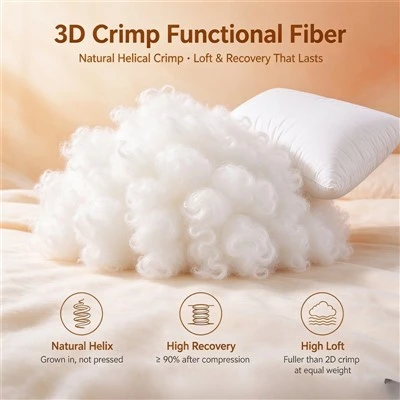
1) Dope-Dyed PLA Staple Fiber avoids limitations of wet finishing: No disperse dyeing, alkaline treatment or reduction clearing required. It maintains good color fastness and fiber strength without PLA hydrolysis damage. It also solves PLA's inherent deep-dyeing difficulty: conventional high-temperature disperse dyeing cannot produce deep shades without causing hydrolysis, while dope dyeing delivers rich, uniform color across the full shade range.2) Bio-based & industrially compostable: Derived from annual crops such as corn and sugarcane, it can degrade under industrial composting conditions (≥58℃) for low-carbon performance.3) Lightweight with high loft: Density around 1.25 g/cm³, roughly 10% lighter than polyester. Products deliver better bulkiness at the same weight, ideal for pillow filling, cushion stuffing and plush toy fiber.4) Low-energy spinning: Spinning temperature at 210–240℃, consuming less energy than dope-dyed polyester fiber.5) Customizable options: Fineness, cut length, shade, profiled cross-section and 3D crimp can be tailored to your requirements.

Technical Specifications
|
Parameter |
Value |
|
Composition |
PLA + PLA-based pigment masterbatch |
|
Fiber type |
Staple fiber |
|
Fineness |
1.0 – 20 denier |
|
Cut length |
32 / 38 / 51 /64mm |
|
Dry tenacity |
≥3.0 cN/dtex |
|
Elongation |
30 - 50% |
|
Cross-section |
Round / trilobal/ |
|
Crimp |
Adjustable to order |
|
Packaging |
Standard bale ~250-300 kg |
Applications
1) Disposable hygiene products: Topsheets for sanitary pads, disposable wipes, mask substrates and medical dressings, compliant with industrial composting requirements.
2) Home textile filling & fabrics: Pillow and quilt filling, baby bedding and soft cushions, delivering gentle touch and good loft.
3) Baby textiles: Baby changing pads, infant apparel and swaddle fabrics, skin-friendly for sensitive skin.
4) Nonwoven filter & acoustic materials: Air filter substrates and sound-absorbing felts for lightweight eco-friendly solutions.
5) Packaging nonwovens: Eco shopping bags and gift lining fabrics, suitable for industrial compost after use.
6) Knitted apparel fabrics: Next-to-skin knitwear and loungewear with softness and breathability. Not recommended for applications requiring strong alkaline washing.

Sustainability & Certifications

Global Standards & Audit
Working closely with international certifi ation bodies.
We cooperate with international certification bodies and independent third-party auditors to maintain full compliance with GRS, RCS and OEKO-TEX® Standard 100 requirements for our textile fiber materials.
GRS
Global Recycle Standard
RCS
Recycled Claim Standard
OEKO-TEX®
Standard 100
Shanghai Manufacturing Facility
Our Shanghai manufacturing facility operates under strict ISO 14001 environmental management and ISO 50001 energy manag!ement systems. Recognized as a National Green Factory, we are committed to sustainableig throughout ourproduction, energy efficiency, and low-carbon manufacturi throughout our operations.
ISO 14001
Environmental Mgt
ISO 50001
Energy Mgt System
National Gree
Factory Certified

Contact Us
For samples, shade cards, or bulk pricing, contact the Different sales team. Tell us the end use, whether a compostability or bio-based claim is planned, the target shade, denier, and monthly volume. Advisors will match the carrier system and pigment package for this Dope-Dyed PLA Staple Fiber and state where that shade stands against composting and bio-based requirements.
Tell us About Your Needs
Different is a trusted manufacturer and long-term partner for your business. Please contact us by filling out the form below, we'll get in touch with you shortly to discuss your specific needs.
Hot Tags: dope-dyed pla staple fiber, China dope-dyed pla staple fiber manufacturers, suppliers, factory